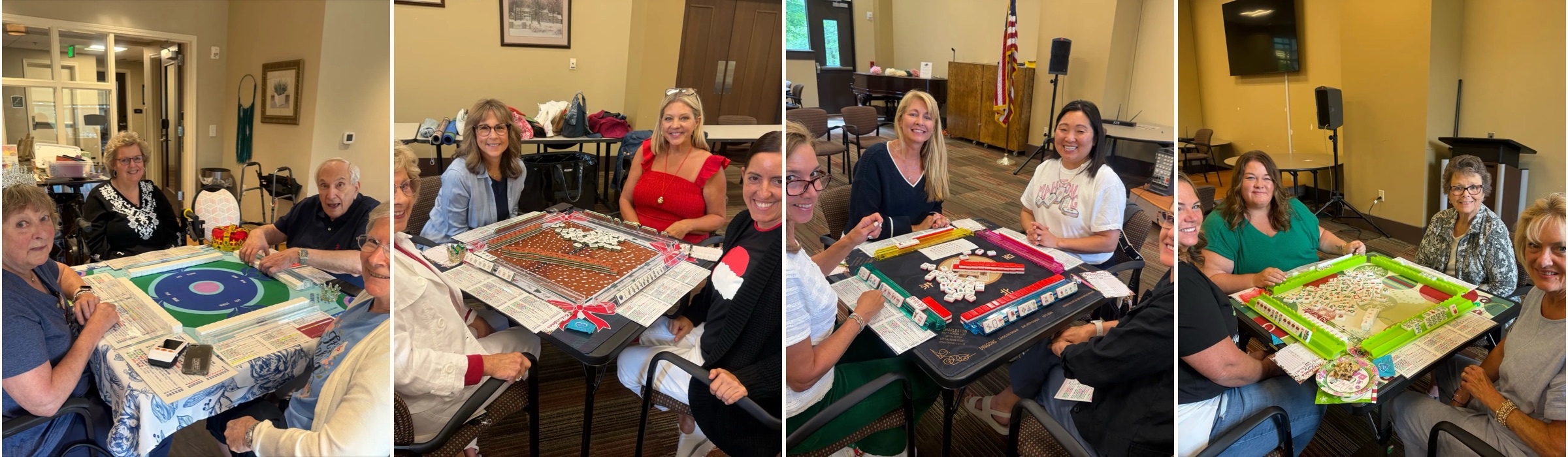
Charleston strategy & tips
Most games are won or lost before the first discard. Here's how to make every pass count, plus the habits that turn new players into confident ones.
Before the first pass
- Sort your rack by suit, then Winds, Dragons, Flowers and Jokers. A tidy rack makes patterns jump out.
- Count what you have. How many Flowers? How many Jokers? Evens or odds? Lots of one number? Those counts point you to sections of the card.
- Pick two or three "maybe" hands, not one. Staying flexible early is the single best Charleston habit.
- Find your dead weight. Which tiles don't fit any of your maybe hands? Those are your first passes.
Charleston passing techniques
Keep the keepers
- Never pass a Joker. It's against the rules anyway, and Jokers are your best friends.
- Flowers are valuable. Many hands use them, so hold on to them early unless you're sure your hand doesn't.
- Pairs and pungs are gold. Matching tiles are much harder to collect than singles, so break up singles first.
Pass with purpose
- Pass the "lonely" tiles: singles with no neighbors or matches in your plan.
- Watch what comes back. If you keep receiving Winds, your neighbors are passing them. A Winds hand may be open, or they may be dumping what they don't want.
- Avoid passing a pair across in the first round. Splitting a pair is fine, but tiles you pass may help the player who's holding their match.
- Use the blind pass on the first Left (and last Right) when all three tiles you'd pass are tiles you need. Pass the incoming tiles along unseen and keep your hand intact.
- Courtesy pass: ask for 3 only if you have 3 real throwaways. Asking for fewer protects good tiles.
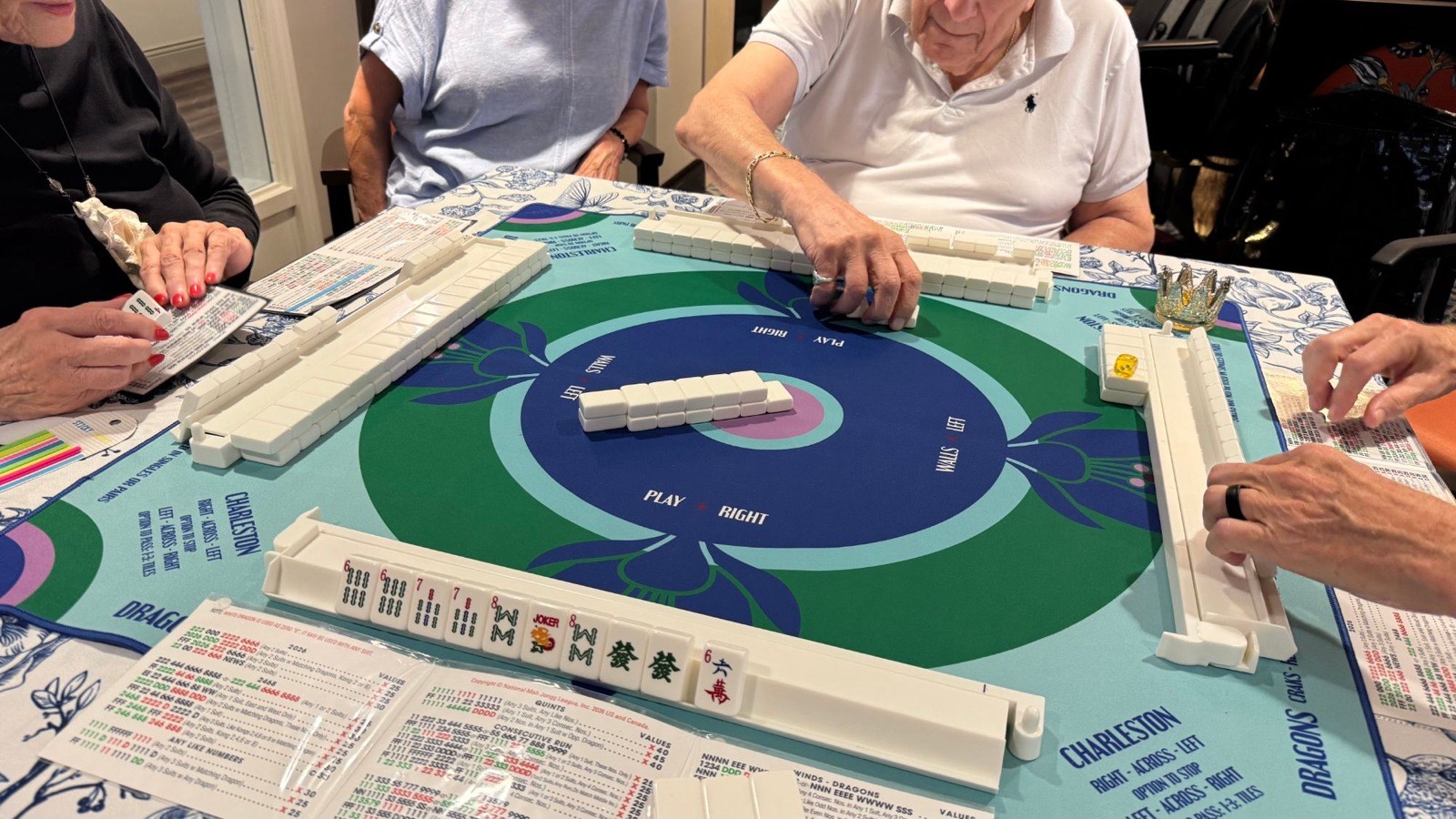
Rena's thinking: Flowers, a Joker, and pairs of 2s and 6s say "2468." Keep all of those, plus the 4B and 8D. Pass three tiles that don't fit evens: 1C, 7D and 9B. The North and Red Dragon can wait a pass in case a Winds/Dragons or matching-dragon hand shows up.
Should you stop the Charleston?
After the first Charleston, any player may stop the second one. Stopping is a strategic choice, not a rude one. Ask yourself:
| Consider stopping if… | Keep going if… |
|---|---|
| You're already close to a hand (only a few tiles away) | You still can't see a clear hand |
| You'd have to break up pairs or pungs to make 3 passes | You still have three tiles you'd happily pass |
| You're holding several Jokers and want to protect your shape | Your hand is flexible and could use fresh tiles |
| You suspect a neighbor is collecting what you'd be forced to pass | You need specific tiles that others seem to be passing |
Rena's rule of thumb: if passing three more tiles would hurt your hand more than three new tiles could help it, stop the Charleston. Rena's printable "Should You Stop the Charleston?" guide will be on the Handouts page.
Tips for beginners
- Read the card daily. Ten minutes a day with the card is the fastest way to get better. Learn one section at a time.
- Say your discards out loud and give others a beat to call before you pick.
- Don't rush to expose. Every call shows the table your plan. On X hands, calling helps, but only when you've picked a hand.
- Commit around the middle of the game. Flexibility is great early, but by the time a third of the wall is gone you should be chasing one hand, maybe with one backup.
- Count the dead tiles. If three 7 Bams are already discarded and you need a pung, it's time to switch hands, or plan to use Jokers.
- Keep Jokers for groups of 3+. They can't help a pair, so plan pairs with real tiles.
- Ask questions! Everyone at the table was a beginner once.
Tips for intermediate players
- Learn the card "backwards." Instead of looking for hands that fit your tiles, learn which tiles are in many hands (Flowers, Soap, evens). Those are the safest to keep.
- Read exposures. Two exposures usually narrow a player to one or two hands. Work out which tiles they need, and don't throw them.
- Redeem Jokers aggressively. Every Joker you take from someone else's exposure helps you and slows them down.
- Mind the wall. As the wall shrinks, the odds favor whoever is closest. If you're far from a hand late, switch to defense.
- Think about value. A 25-point hand won on time beats a 50-point hand you never finish, especially in tournament scoring.
- Watch the Charleston. Notice what your neighbors passed. It tells you what they aren't collecting.
Playing defense
- Safe discards: tiles that have already been discarded (and not called), or tiles that don't fit anyone's visible exposures.
- Hot tiles: anything that matches or extends another player's exposures, especially late in the game.
- Don't feed the Mahj. If a player has three exposures and is clearly one tile away, holding a dangerous tile can save you from paying double.
- Call a dead hand (politely) when someone's exposures can't match any hand on the card. It improves your odds.
Practice makes "Mahj!"
Reading about strategy helps, but nothing beats playing. Join a practice table or Rena's upcoming league to put these tips to work.
League info